
October Calculator Updates
We are constantly updating to reflect any increases or decreases in state fees or underwriter changes to ensure you are pulling accurate quotes each time. Our calculator has been updated to reflect fee changes in the following state(s):
-Alaska
-Washington
All States: Calculator has been updated to reflect adjustments to the number of recorded pages. This is an estimate only, actual cost will apply.
Conveniently get a quote any time, day or night, by simply and accurately inputting the required information and let our interactive fee calculator do the rest. Please call 844-808-8299 or email Solutions@AllegiantReverse.com for further details or for a quote.
See you in Minneapolis!
Counting down the days until we see you at the NRMLA Annual Meeting & Expo in Minneapolis! We have a busy few days planned and look forward to meeting and catching up with our industry customers, partners and friends.
Attend our Learning Lab: Let’s be Honest with ARS on October 7th. Megan Awalt (Vice President), will be moderating and joined by panelists Shelly Fisher (Lead Settlement Officer), Josalyn Pagonis (Lead Settlement Officer), and Tina Meilinger (Senior Vice President). Click here to submit a question for the Q&A portion of the Learning Lab.
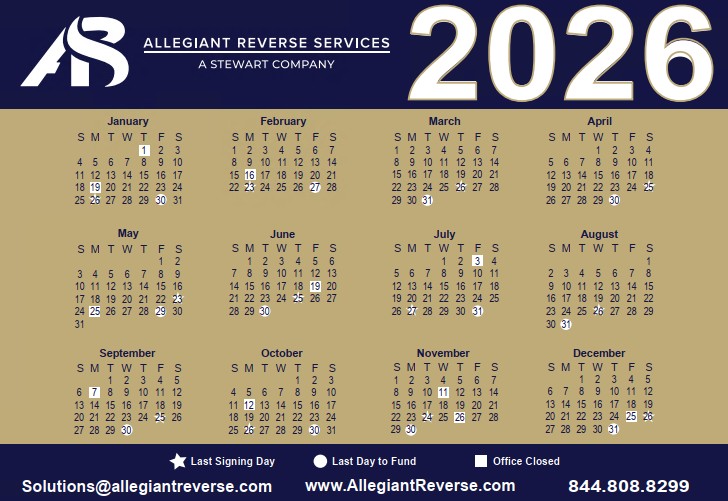
Stop by our booth to say hello. Don’t forget to pick-up your 2026 mousepad calendar.
Book an appointment with us. We’d love to set aside time to meet with you during the conference! Click here to schedule time with our team.
Safe travels to Minnesota and we’ll see you there!
October and the Pink Ribbon: What You Should Know
Written by: Sarah Clark, Better Health with Sarah
October and the Pink Ribbon: What You Should Know
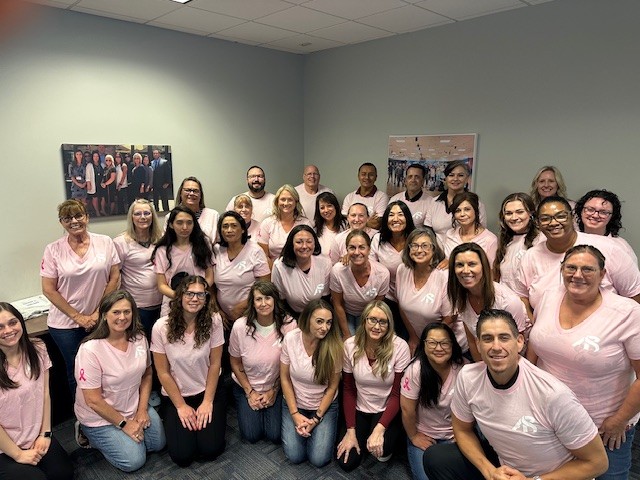
Every October, pink ribbons appear on everything from food packaging to personal care items to household products — all meant to raise awareness for breast cancer.
While the pink ribbon has become a symbol of awareness, hope and support, it’s important to recognize a growing concern: pinkwashing. This term refers to companies that promote pink ribbon products to show support for breast cancer awareness, while at the same time selling products that contain ingredients linked to the disease.
According to Breast Cancer Action, a pinkwasher is “a company or organization that claims to care about breast cancer by promoting a pink ribbon product, but at the same time produces, manufactures, and/or sells products containing chemicals that are linked to the disease.”
So how can we support breast cancer awareness in a meaningful way?
- Take a closer look at labels and ingredients before purchasing pink ribbon products.
- Choose items from brands that are transparent and committed to safer practices.
- Consider donating directly to organizations making a measurable impact, such as:
- Breast Cancer Prevention Partners – https://www.bcpp.org/ – focused on prevention through science and advocacy
- Campaign for Safe Cosmetics– https://www.safecosmetics.org/ focuses on eliminating dangerous chemicals from products
- METAvivor– https://metavivor.org/ supporting research and awareness for Stage 4 breast cancer
- Albie Aware – https://albieaware.org/ a Sacramento-based nonprofit providing direct support to breast cancer patients
Awareness matters, but so does accountability. This October, let’s ensure that pink stands for more than profit.
Sarah Clark – Non-Toxic Living Educator
Follow me on IG: @betterhealthwithsarah
Article from breastcancer.org
https://www.breastcancer.org/about-breast-cancer/breast-cancer-awareness-month/pinkwashing
Title Tale: Judgment Liens: Why Your Borrower May Have to Pay Even When They Swear They Shouldn’t
Written by: Mylene Marcelo, Title Manager/Title Officer
In a recent file, a borrower came back after closing upset that escrow paid off two judgments. His protest? “I’m not supposed to pay these!”
Well, here’s the naked truth: He sued, he lost, and the court ordered him to pay. Those judgments didn’t just vanish into thin air- they got perfected and latched onto his real estate like barnacles on a ship. Since the judgments showed up in the title commitment, escrow had to clear them before closing. He reviewed, signed off on it and agreed to the payoff and then tried to backpedal later. Too late.
Whether a judgment sticks to the subject property depends on state law. Each state set the rules for how a judgment becomes “perfected” and how long it lasts.
Let’s take a tour of some states for example.
In California, a judgment only attaches to real property once an Abstract of Judgment is recorded in the county where the property sits. Think of it like dating. You can’t call it official until you “go public” on social media. Here, “going public” means recording at the county.
Once recorded, the clock starts ticking from the date of the judgment, and it’s enforceable for 10 years and renewable.
Grand Canyon State Arizona is a dual-checkpoint perfection state. It makes you do both: file the judgment in court and record a certified copy in the county recorder’s office. If you only take one step, the judgment is like a half-baked cake, and it won’t cloud title. Once perfected, it is attached to the real estate property in the county where the debtor owned and enforceable for 10 years and renewable.
In the Sunshine State Florida, a judgment doesn’t automatically stick. You’ve got to record a certified copy of the judgment in the county’s official records and enforceable for the 10 years and renewable.
And the Garden State New Jersey keeps it simple. A Superior Court judgment will automatically attach statewide to any real estate the debtor owns. No extra filings, no running around with copies. Think of it as the “super-glue” state. Once you lose it, it sticks everywhere, and it lasts for 20 years from the date of entry. Before the 20 years run out, the creditor can apply to the court to revive or renew the judgment.
A lender might use a tool such as a Fraud Guard which flags lawsuits or complaints, but what really matters for us is perfection. A simple lawsuit filing doesn’t cloud title; only perfected judgment does. If a judgment isn’t perfected under the state law, it won’t attach to real estate and it won’t appear in the title commitment. That’s why we don’t list “purported judgments”, and only enforceable liens make it onto the commitment. Borrowers may argue otherwise, yet state law and their own signatures leave no room for debate.
For further details or deeper state-specific guidance, please contact your favorite Escrow Officer to inquire with our underwriting department.
September Webinar
The Borrower’s Experience
CRMP Certified – Basic
Thursday, September 18, 2025
10:00 am PST
Click here to register.
September Calculator Updates
We are constantly updating to reflect any increases or decreases in state fees or underwriter changes to ensure you are pulling accurate quotes each time. Our calculator has been updated to reflect fee changes in the following state(s):
-Florida
-New Mexico
-North Carolina
Conveniently get a quote any time, day or night, by simply and accurately inputting the required information and let our interactive fee calculator do the rest. Please call 844-808-8299 or email Solutions@AllegiantReverse.com for further details or for a quote.
September Office Closure
Our office will be closed Monday, September 1, 2025 for Labor Day.
Contact

TF: 844.808.8299
905 Highland Pointe Dr., Suite 150
Roseville, CA 95678
We are